

Cannabis Terpenes Explained: The Aromatic Compounds Behind Every Strain
- Elevated Club NYC

- Jul 6
- 2 min read
If you’ve ever noticed that one cannabis flower smells like fresh lemons while another reminds you of pine, lavender, or black pepper, you’ve experienced the power of terpenes. These naturally occurring aromatic compounds are found throughout the plant kingdom and give many fruits, herbs, and flowers their distinctive scents. In cannabis, terpenes contribute to each cultivar’s unique aroma and flavor profile, making them an important part of how consumers compare and appreciate different varieties.
More than 200 terpenes have been identified in cannabis, although only a handful commonly appear in significant concentrations. While cannabinoids such as THC and CBD often receive the most attention, terpenes have become an important part of cannabis education because they help distinguish one cultivar from another. Researchers continue to study how terpenes interact with cannabinoids and other plant compounds, often referred to as the entourage effect, though many aspects of these interactions are still being investigated.
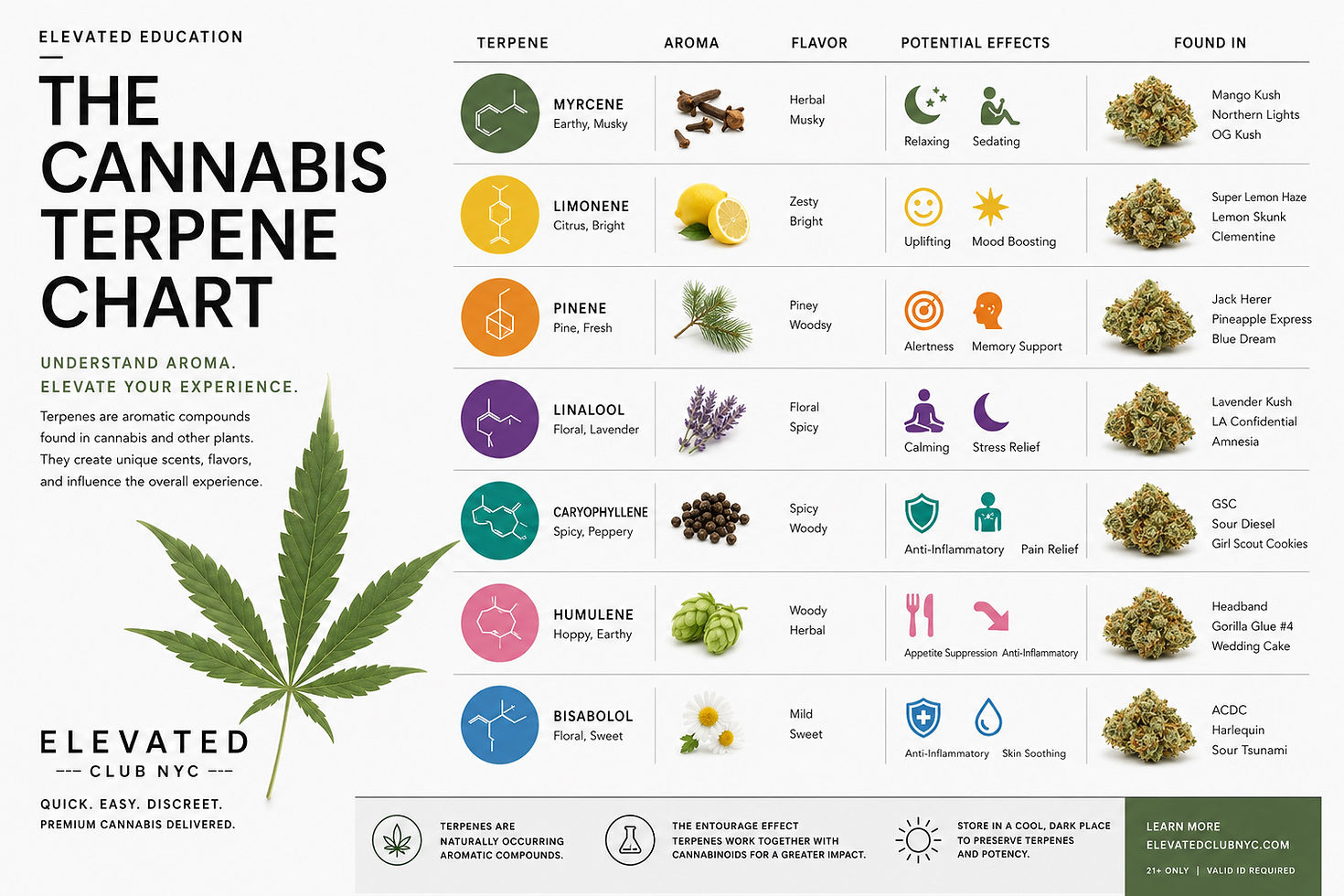
Some of the most common cannabis terpenes include:
Myrcene – Earthy, musky, and herbal. Frequently found in many traditional cannabis cultivars as well as mangoes and thyme.
Limonene – Bright citrus aromas reminiscent of lemons and oranges. Also naturally found in citrus peels.
Pinene – Fresh pine and forest notes commonly found in pine needles, rosemary, and basil.
Linalool – Soft floral aromas similar to lavender with delicate herbal undertones.
Caryophyllene – Peppery, spicy, and woody characteristics also present in black pepper, cloves, and cinnamon.
Humulene – Earthy and hoppy aromas found in hops used for brewing beer.
Bisabolol – Mild floral notes commonly associated with chamomile.
When selecting cannabis, many experienced consumers look beyond THC percentages and explore terpene profiles. Two cultivars with similar cannabinoid content can smell, taste, and feel noticeably different because of their terpene composition. Reading product labels, asking questions, and comparing aromas can help you better understand your personal preferences over time.
Proper storage is equally important for preserving terpenes. Exposure to heat, oxygen, and sunlight can gradually reduce the aromatic compounds that give cannabis its character. For best results, store flower in an airtight glass container with humidity between 58–62%, kept in a cool, dark place away from direct light. These simple practices help maintain freshness and protect the unique qualities of premium flower.
At Elevated Club NYC, we believe cannabis education is part of delivering a better customer experience. Our curated menu features premium flower selected for quality, consistency, aroma, and craftsmanship. Understanding terpene profiles allows you to shop with greater confidence and discover new cultivars that match your personal taste—not just a number on a label.
The next time you open a fresh jar, take a moment to appreciate the aroma before your first session. Those scents tell the story of the plant and are one of the reasons every cultivar offers its own distinctive experience.


Comments