



Maryland Firefighters Can Now Legally Use Medical Cannabis Off Duty — And It Signals A Bigger Shift In Workplace Cannabis Policy
- Elevated Club NYC

- May 11
- 3 min read
Maryland is becoming one of the latest states to rethink how cannabis laws apply to public safety workers.
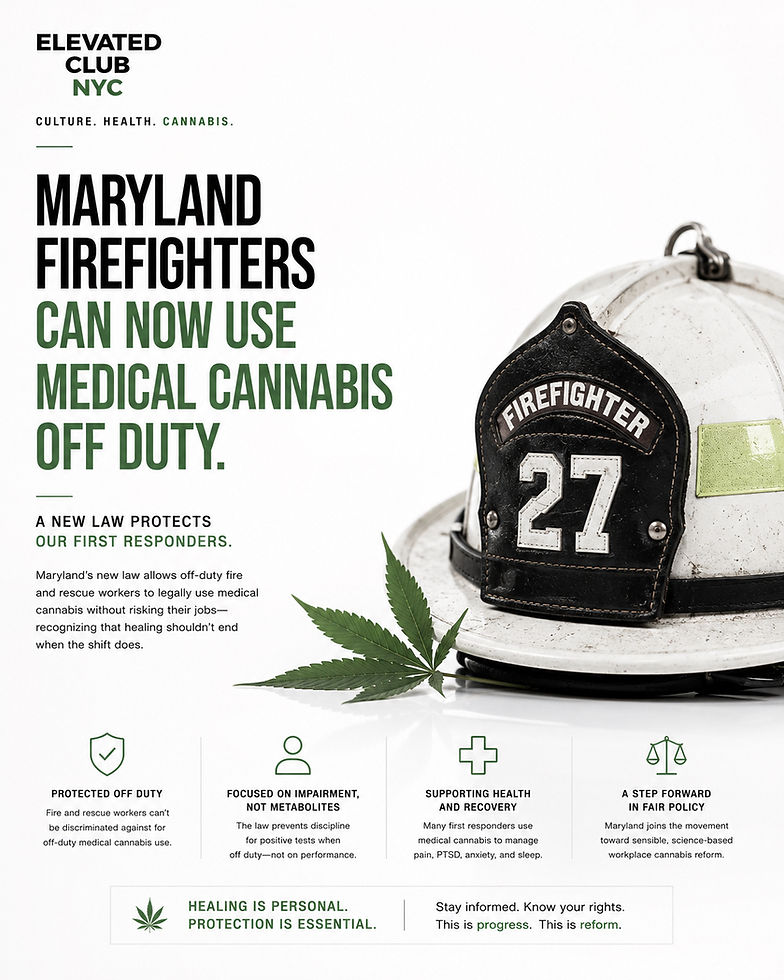
A newly signed law now allows off-duty fire and rescue workers in Maryland to legally use medical cannabis without automatically risking their employment—marking a significant shift in how states are approaching workplace marijuana protections. (blog.mpp.org)
The legislation, backed by the Marijuana Policy Project (MPP), prevents employers from disciplining or discriminating against firefighters and rescue personnel solely for being registered medical cannabis patients or testing positive for marijuana metabolites during off-duty use. (blog.mpp.org)
The policy change highlights a larger national issue cannabis legalization has created:
many workers can legally consume cannabis under state law while still remaining vulnerable to workplace penalties tied to outdated drug-testing systems.
That contradiction has become especially controversial in professions involving public safety, healthcare, transportation, and emergency response.
Traditional cannabis drug tests typically detect inactive THC metabolites that can remain in the body long after intoxication ends—sometimes for days or weeks. Critics argue these tests measure historical cannabis exposure rather than actual impairment, creating conflicts between legal off-duty use and employment policies. (blog.mpp.org)
For medical cannabis patients, the issue is even more complicated.
Many firefighters, EMTs, and rescue workers reportedly use medical cannabis to manage chronic pain, PTSD symptoms, sleep issues, anxiety, and physical recovery tied to the demands of emergency-response work. Supporters of the Maryland law argue workers should not lose their careers for legally using state-approved medicine during personal time. (blog.mpp.org)
At the same time, the law does not allow on-duty intoxication or impairment.
Departments still retain authority to prohibit cannabis use while working and to enforce impairment-related safety standards. The legislation specifically focuses on protecting lawful off-duty medical use rather than removing workplace safety oversight entirely.
That distinction matters politically.
Cannabis employment protections remain one of the most legally fragmented areas of legalization nationwide. Some states provide broad worker protections for legal cannabis consumers, while others still allow employers to terminate workers for positive THC tests regardless of legal status or impairment.
Federal law also continues complicating the issue.
Because cannabis remains federally restricted, many employers tied to federal funding, transportation rules, or Department of Transportation standards still operate under stricter cannabis policies even in legal states.
Maryland’s move reflects a growing trend toward separating cannabis use from automatic assumptions of workplace impairment.
The debate is increasingly shifting away from whether cannabis is legal and toward how legalization actually functions inside modern employment systems.
That conversation is becoming urgent as more states expand both medical and recreational cannabis access.
Public opinion is changing too.
Many consumers now view off-duty cannabis use similarly to alcohol—something that should remain legal during personal time as long as workplace performance and public safety are not compromised.
For first responders especially, the issue carries emotional weight.
Firefighters and emergency workers often experience extreme physical stress, trauma exposure, and mental-health challenges. Advocates argue legal medical cannabis access provides another recovery option without forcing workers into career-ending legal conflicts.
The broader cannabis industry is watching closely because employment protections may become one of the next major battlegrounds in legalization policy nationwide.
At Elevated Club NYC, the focus remains on understanding how cannabis reform impacts real people—not just markets and politics.
Because legalization isn’t only about access.
It’s about how cannabis integrates into everyday life, work, healthcare, and modern society itself.


Comments