



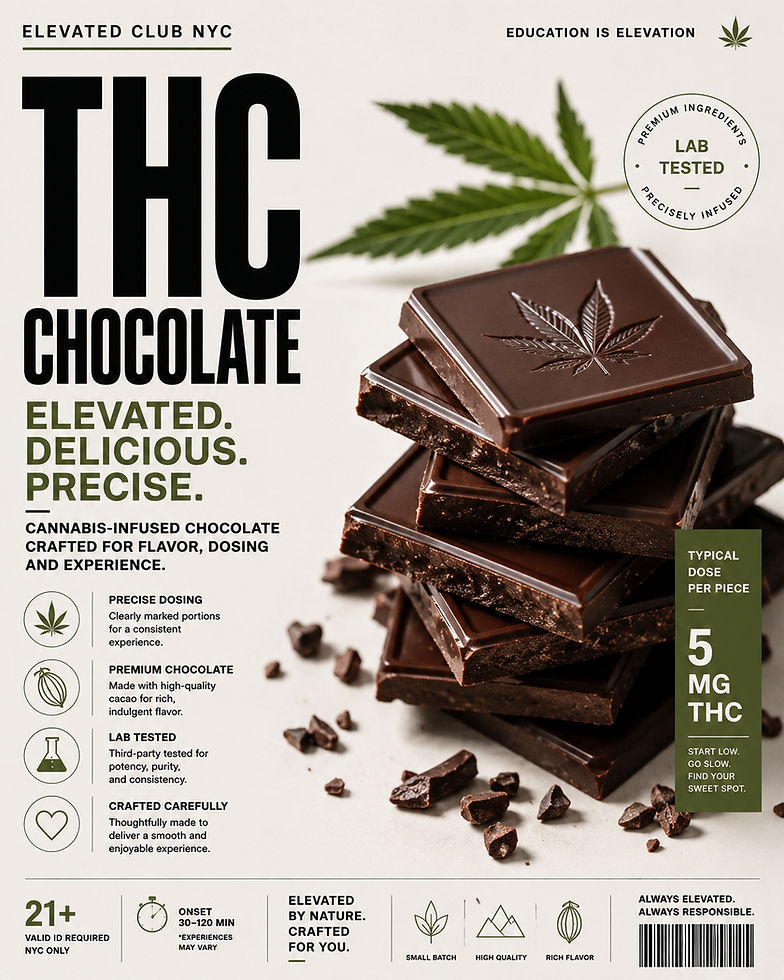
THC Chocolate Explained: Why Cannabis-Infused Chocolate Remains One of the Most Popular Edibles

By Justice — Elevated Club NYC
Cannabis-infused chocolate has become one of the most recognizable edible products in the legal cannabis industry. Combining premium chocolate with precisely measured cannabinoids, THC chocolate offers adults a familiar and discreet way to consume cannabis while delivering a flavorful experience that blends confectionery craftsmanship with modern cannabis science.
Unlike smoking or vaping, THC chocolate is an edible, meaning cannabinoids are absorbed through the digestive system rather than the lungs. Before cannabinoids are added to chocolate, cannabis extracts undergo decarboxylation, a heating process that converts cannabinoid acids into their active forms. Once infused into cocoa butter or another fat source, the cannabinoids are evenly distributed throughout the chocolate to help create consistent serving sizes. (Wikipedia)
Chocolate is particularly well suited for cannabis infusions because of its natural fat content. Cannabinoids such as THC are fat-soluble, allowing them to blend effectively with cocoa butter. This compatibility has made chocolate one of the industry’s longest-standing edible formats, from individually portioned squares to gourmet truffles and artisan chocolate bars. (Wikipedia)
Today’s legal cannabis market offers a wide variety of THC chocolates. Dark chocolate remains a favorite for its rich cocoa flavor, while milk chocolate provides a sweeter profile. White chocolate, caramel, sea salt, espresso, mint, orange, hazelnut, and fruit-infused varieties have expanded the category even further. Many manufacturers also incorporate premium ingredients to create products that resemble traditional gourmet chocolate rather than conventional edibles.
One reason THC chocolate remains popular is precise dosing. Licensed manufacturers divide chocolate bars into clearly marked sections, allowing adults to identify individual serving sizes. Many products are formulated with measured doses per square, making it easier to consume consistently. Even with accurately labeled products, individual responses vary depending on metabolism, body composition, food intake, and personal tolerance. Consumers should begin with a low serving, wait long enough for effects to develop, and avoid consuming additional portions too quickly. (Wikipedia)
Unlike inhaled cannabis, edible products typically require more time before noticeable effects occur because they must first pass through digestion and metabolism. While onset time varies from person to person, the effects generally last longer than inhaled cannabis. This longer duration is one reason responsible dosing is especially important when consuming THC chocolate. (Wikipedia)
As cannabis legalization has expanded, THC chocolate has evolved beyond simple novelty products. Today’s premium chocolate edibles often emphasize high-quality cocoa, refined flavor profiles, consistent manufacturing, laboratory testing, and attractive packaging. Much like specialty coffee or craft chocolate, manufacturers increasingly focus on ingredient quality and overall consumer experience rather than potency alone. (Food & Wine)
Whether you prefer rich dark chocolate, creamy milk chocolate, or artisan infused confections, THC chocolate continues to demonstrate how cannabis and culinary craftsmanship can come together in a carefully formulated edible. As the cannabis industry continues to innovate, chocolate remains one of its most enduring and sophisticated product categories.
At Elevated Club NYC, we believe informed consumers make better decisions. Understanding how THC chocolate is produced, how edibles differ from inhaled cannabis, and why serving size matters helps adults enjoy cannabis more responsibly.
Education is Elevation.
For adults 21 years of age and older. Consume responsibly. Never drive or operate machinery after consuming cannabis. Follow all applicable New York laws.


Comments