



New York Cannabis in 2026: Legal on Paper, Competitive in Reality
- Elevated Club NYC
- Mar 18
- 2 min read
By Justice — Elevated Club NYC
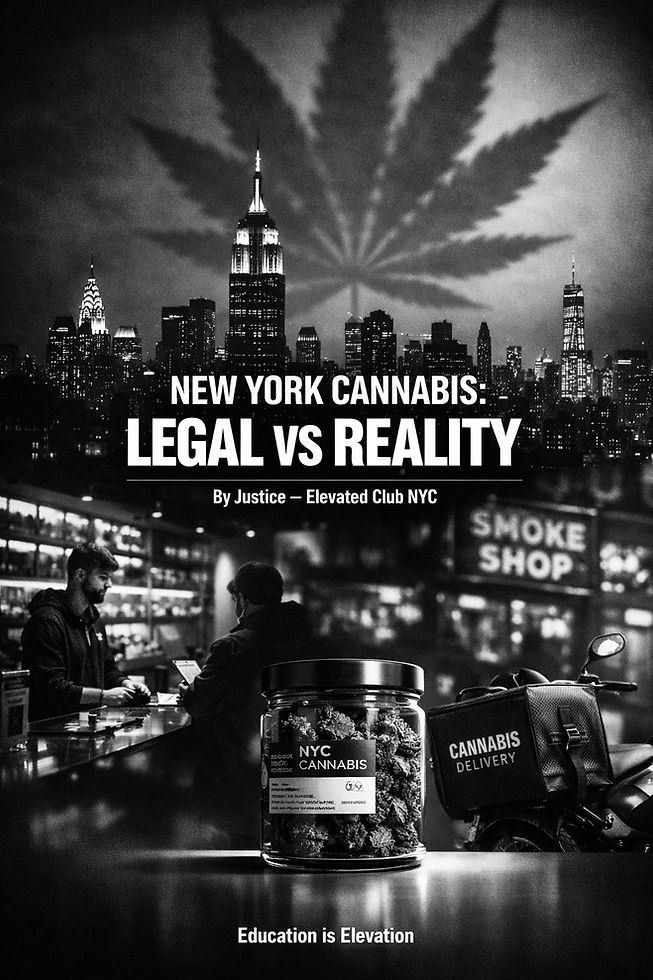
New York legalized cannabis with a clear vision: equity, access, and a regulated market that could replace decades of prohibition. But in 2026, the reality on the ground tells a more complex story. The legal market is growing—but it’s still competing with a system that never stopped.
Across New York City, enforcement against unlicensed smoke shops has intensified. Raids, product seizures, and storefront shutdowns have become more common as regulators try to bring order to a crowded and chaotic retail landscape. The goal is simple: protect licensed operators and push consumers toward legal channels. But the impact is mixed. For every shop that closes, another seems to open, reflecting how deeply rooted the informal market still is.
At the same time, licensed businesses are facing real operational pressure. High taxes, strict compliance requirements, and expensive startup costs make it difficult to compete on price. For consumers, that difference is noticeable. Legal products often come at a premium, while unlicensed options remain cheaper and more accessible. Convenience still drives behavior—and in New York, convenience often wins.
Delivery is a perfect example. The state allows licensed cannabis delivery, but the rules are tight. ID verification, tracking systems, and geographic restrictions create a controlled environment. Meanwhile, gray-market delivery services continue to operate with fewer barriers, offering speed and simplicity that many consumers are already used to. The result is a split ecosystem where legal infrastructure exists, but informal networks still dominate.
Dispensary expansion is happening, but slower than expected. The state prioritized social equity applicants, which is a step in the right direction, but rollout delays have limited how quickly the legal market can scale. In many neighborhoods, demand still outweighs legal supply, leaving space for unlicensed sellers to fill the gap.
Tax revenue is growing, but not at the pace early projections promised. The state is generating significant income from cannabis, yet a large portion of potential revenue is still being lost to the illicit market. Regulators are aware of this and continue to adjust policies, looking for ways to make the legal system more competitive without compromising its structure.
This is where New York stands today: not at the beginning, but not fully established either. Legal cannabis exists, but it’s still proving itself in real time.
From my perspective, the conversation isn’t just about legal versus illegal—it’s about experience. Price, access, trust, and convenience all play a role in where people choose to buy. If the legal market wants to lead, it has to meet consumers where they are, not where policy expects them to be.
Because in New York, cannabis isn’t just a product—it’s a culture. And culture doesn’t wait for regulation to catch up.
Stay Elevated.


Comments